Is Your Sump Pump Ready for the Next Atlanta Storm? Warning Signs Homeowners Should Check
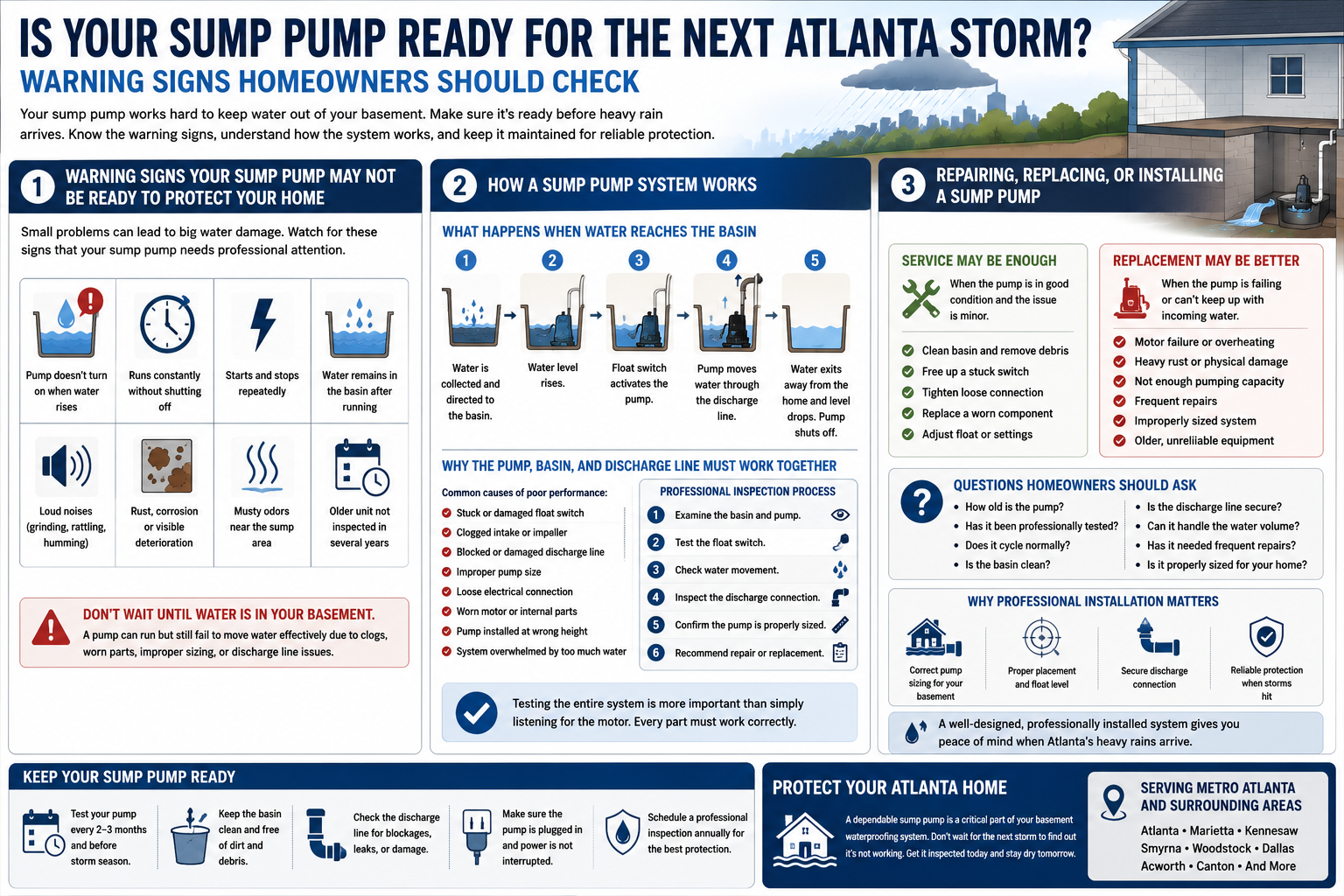
Warning Signs Your Sump Pump May Not Be Ready to Protect Your Home
A sump pump is easy to forget when it is working properly. It usually sits quietly in a basin at the lowest part of the basement, waiting for water to collect. During heavy rain, the system activates and moves that water away before it can rise into the living or storage areas of the home.
For homeowners in Atlanta, Marietta, Kennesaw, and surrounding Metro Atlanta communities, that quiet piece of equipment can play an important role during periods of prolonged or intense rainfall. The problem is that many people do not think about the condition of the pump until water is already collecting where it should not.
A sump pump is only one part of a complete basement waterproofing system. Water may first be collected through an interior drainage channel or another moisture-management feature before it reaches the basin. The pump then removes the collected water through a discharge line. If any part of that process stops working, the basement may be left without the protection the homeowner expects.
One of the clearest warning signs is a pump that does not start when water rises in the basin. This may happen because the float switch is stuck, the electrical connection has failed, the motor is damaged, or debris is preventing the system from operating correctly.
The opposite problem can also occur. A pump that runs constantly may be struggling to keep up with incoming water, operating with a stuck switch, or failing to remove water through the discharge line. Continuous operation places additional wear on the motor and should not be ignored.
Warning signs that your sump pump may need professional attention include:
- The pump does not activate as water rises in the basin
- The motor runs continuously without shutting off
- The system starts and stops repeatedly within a short period
- Water remains in the basin after the pump has operated
- The pump makes grinding, rattling, humming, or vibrating noises
- Rust, corrosion, or visible deterioration appears on the equipment
- Musty odors are noticeable around the sump area
- The pump appears to move less water than it did previously
- The system is older and has not been inspected in several years
Noise can provide useful clues. A brief, steady operating sound is normal when the pump activates. Loud rattling may indicate that a component is loose, while grinding can point to worn internal parts or debris near the impeller. A humming motor with little or no water movement may mean the pump is receiving power but cannot operate effectively.
Homeowners should also watch the water level in the basin. Some water may remain after the pump shuts off, depending on the system design. However, the level should generally fall as the pump operates. If it stays high, rises quickly again, or never seems to move, the system may have a blockage, damaged pump, switch problem, or discharge concern.
Frequent cycling can be another warning sign. A pump that turns on and off every few seconds may be incorrectly positioned, improperly sized, or affected by a faulty float switch. Repeated short cycles can wear out the motor more quickly and may prevent the system from handling water efficiently.
It is also possible for the motor to run while the system fails to move enough water. A clogged intake, damaged impeller, blocked discharge line, or weak motor can reduce performance without completely stopping the pump. Hearing the equipment operate does not automatically mean the basement is fully protected.
The following symptoms deserve prompt professional evaluation:
- Water rising close to the top of the basin
- A pump that will not start during a test
- Repeated loss of power or tripped electrical protection
- Water leaking around the pump or discharge connection
- A discharge line that appears loose, blocked, or damaged
- A strong musty smell or visible moisture around the sump area
Waiting until a major storm is underway is the worst time to discover that the pump has failed. Heavy rainfall can bring water into the system quickly, leaving little time to arrange service before the basin overflows. A pre-storm inspection can identify worn parts, improper operation, or installation concerns while there is still time to correct them.
Homeowners should avoid assuming that an older pump is dependable simply because it worked during the last storm. Mechanical equipment changes over time. Corrosion, debris, wear, electrical issues, and repeated cycling can all affect performance between one season and the next.
A professional inspection can determine whether the problem is limited to cleaning or adjustment, whether a component needs repair, or whether the pump should be replaced. The goal is to confirm that the system is prepared to remove water when the next period of heavy Atlanta rain arrives.
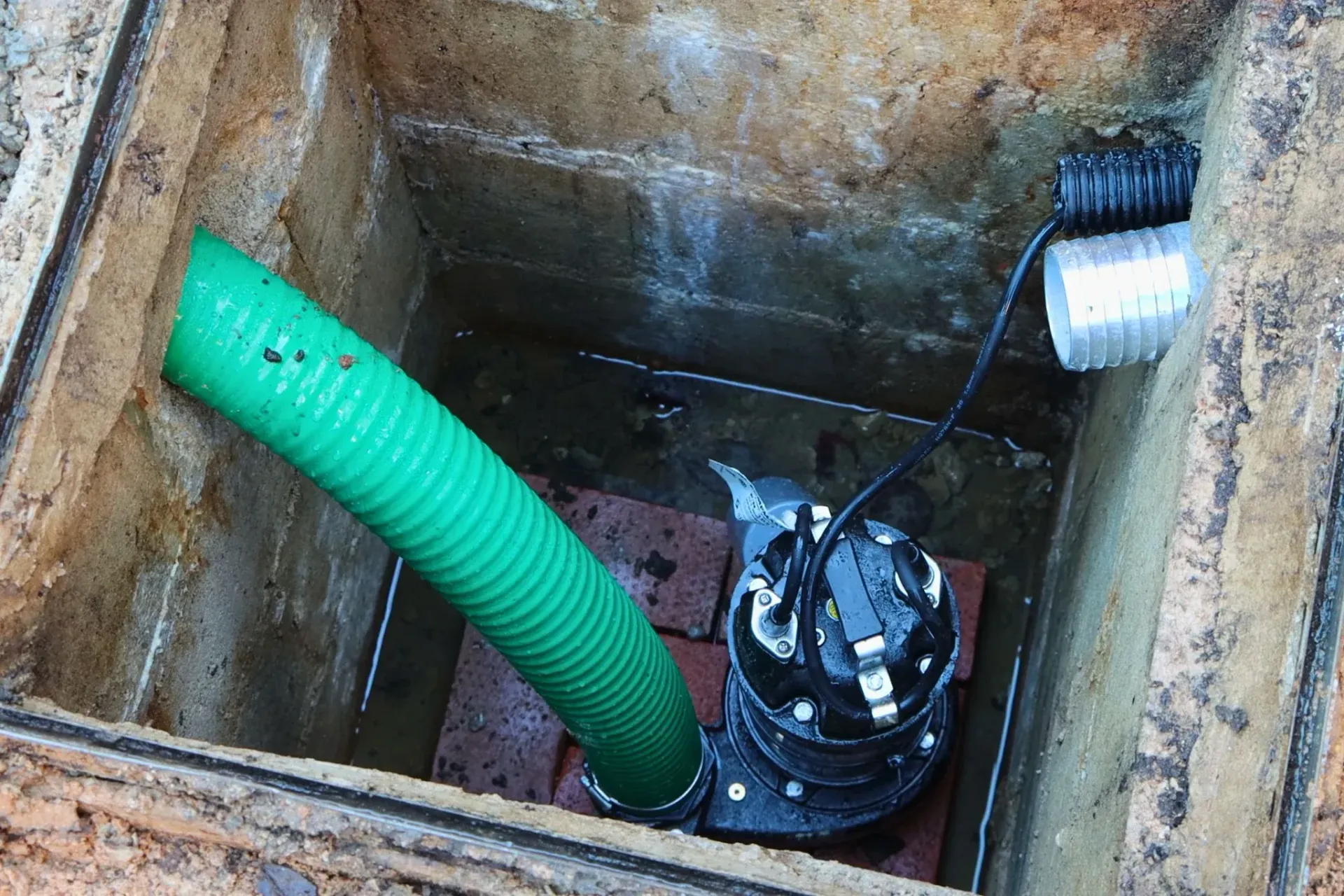
What Happens When Water Reaches the Sump Basin
A sump pump system follows a simple sequence, but every part of that sequence must work correctly. Water is first collected and directed toward the sump basin. As the water level rises, a float or switch activates the pump. The pump then pushes the water through a discharge pipe and away from the protected area.
The basic operating process looks like this:
- Water enters the interior drainage system or sump basin.
- The water level rises around the pump.
- The float switch reaches its activation point.
- The pump motor turns on.
- Water moves through the discharge connection.
- The water level drops and the pump shuts off.
A problem at any stage can reduce the system’s effectiveness. If water cannot reach the basin, it may collect elsewhere. If the switch does not activate, the pump remains off. If the motor runs but the discharge line is blocked, the water may stay in the basin or return to the system.
This is why a sump pump should not be viewed as a stand-alone cure for every basement moisture concern. It works best as one part of a planned waterproofing system that collects, manages, and removes water in a controlled way.
Depending on the property, the complete system may include:
- An interior drainage channel
- A properly sized sump basin
- A primary sump pump
- A secure discharge line
- Waterproof wall treatments or coatings
- Vapor-control materials
- Other moisture-management components selected for the basement
Why the Pump, Basin, and Discharge Line Must Work Together
The pump receives most of the attention, but the basin and discharge line are equally important. A basin that is too small may fill rapidly and cause the pump to cycle constantly. A pump that is too weak may not remove water fast enough. A damaged discharge line can prevent water from leaving the system efficiently.
Debris in the basin can interfere with the float switch or intake. Dirt, small stones, sediment, and other material may build up over time, especially when the basin has not been cleaned or inspected. If the float cannot move freely, the pump may fail to start or may continue running after the water level drops.
The discharge connection must also remain secure. A loose fitting can leak water back into the sump area, while a blockage may cause the pump to strain. In some systems, water may return to the basin after the motor shuts off if the line or check valve is not working properly.
Common causes of poor sump-pump performance include:
- A stuck, damaged, or poorly positioned float switch
- A clogged pump intake or impeller
- A blocked, loose, or damaged discharge line
- An undersized pump that cannot keep up with incoming water
- An oversized or poorly configured system that cycles too frequently
- A worn motor or internal mechanical component
- Loose electrical connections or repeated power interruptions
- A pump installed at an incorrect height inside the basin
- Debris or sediment interfering with normal operation
Pump sizing matters because every basement and waterproofing system is different. The amount of water entering the basin, the distance it must be moved, the height of the discharge route, and the design of the drainage system all affect how much capacity is needed.
Choosing a pump based only on price or physical size can lead to disappointing performance. A unit that is not matched to the conditions may run constantly, fail to remove water quickly enough, or wear out sooner than expected.
A professional sump-pump inspection generally includes:
- Inspecting the basin for debris, damage, and proper pump placement
- Testing the float switch and activation level
- Confirming that the pump starts, runs, and shuts off normally
- Checking how quickly water moves out of the basin
- Inspecting visible discharge connections and related components
- Evaluating whether the pump is properly sized for the system
- Recommending cleaning, repair, adjustment, or replacement
Testing the entire setup provides more useful information than simply listening for the motor. The inspection should confirm that water actually leaves the basin, the switch responds correctly, and the pump can complete a normal cycle without unusual noise or strain.
Homeowners should also mention any recent changes in performance. Longer run times, increased noise, rapid cycling, or a higher water level in the basin can help identify a developing problem. Details about previous repairs and the age of the equipment may also guide the recommendation.
When the pump, basin, switch, and discharge connection work together, the system can respond automatically during periods of rising water. Keeping those components maintained helps reduce the chance of discovering a hidden failure during the next strong Metro Atlanta storm.
Does Your Sump Pump Need Service or Replacement?
Not every sump-pump problem requires a complete replacement. Some issues can be corrected by cleaning the basin, freeing a stuck switch, tightening a connection, removing debris, or replacing a limited component. The correct solution depends on the age, condition, and performance of the equipment.
Service may be appropriate when the pump is generally in good condition and the problem is isolated. For example, debris may be preventing the float from moving, or a loose connection may be affecting the discharge line. Correcting the specific problem may restore dependable operation.
Replacement may be more practical when the motor has failed, the pump is heavily corroded, or the system repeatedly needs repair. A pump that cannot keep up with incoming water may also need to be replaced with equipment that better matches the basement and waterproofing design.
Common reasons to consider replacing a sump pump include:
- The motor no longer starts or frequently overheats
- The pump is heavily rusted, corroded, or physically damaged
- The system repeatedly loses pumping capacity
- The unit runs constantly but does not lower the water level
- The pump cannot keep up during periods of heavy rain
- Repairs have become frequent or increasingly expensive
- The equipment was not properly sized for the basin or water volume
- The pump is older and its reliability is uncertain
Homeowners do not need to wait for complete failure before asking for an evaluation. Declining performance can provide enough reason to compare repair and replacement options. Replacing an unreliable pump before storm season may be less disruptive than responding after water has already overflowed the basin.
Before deciding what to do, homeowners should ask:
- How old is the current pump?
- Has it been professionally inspected or tested recently?
- Does it start and stop at the correct water levels?
- Is the basin clean and free of debris?
- Does the pump move water quickly enough?
- Is the discharge connection secure and functioning?
- Has the system required repeated repairs?
- Can it handle the amount of water entering during heavy rainfall?
A new pump should be selected according to the actual system rather than purchased solely by price. The basin size, expected water volume, discharge height, piping configuration, and surrounding waterproofing components should all be considered.
Professional installation also helps ensure that the float moves freely, the pump sits at the correct level, the discharge connection is secure, and the equipment cycles properly before the job is complete. These details directly affect reliability.
Sump-Pump Installation in Atlanta and Marietta, GA
A sump pump is most effective when it is installed as part of a coordinated basement waterproofing plan. The system should collect water, direct it toward the basin, activate at the proper level, and discharge the water safely and consistently.
PPS Waterproofing provides sump-pump installation and related basement waterproofing services for homeowners throughout Metro Atlanta. A professional evaluation can determine whether the current pump needs service, whether the basin or connections require attention, or whether a new system would provide more dependable protection.
Professional sump-pump service can help homeowners:
- Confirm that the pump activates correctly
- Identify worn or failing components
- Remove debris that interferes with operation
- Evaluate pump size and water-removal capacity
- Inspect the basin and visible discharge connections
- Replace unreliable or damaged equipment
- Coordinate the pump with a broader waterproofing system
The right recommendation depends on the condition of the basement, the design of the existing system, and the amount of water the pump must manage. Some homes may need a straightforward pump replacement, while others benefit from additional waterproofing improvements that help collect and control water more effectively.
Homeowners in Atlanta, Marietta, Kennesaw, Smyrna, Woodstock, Dallas, Acworth, Canton, and nearby communities should not assume that a quiet sump pump is automatically a reliable one. The equipment may remain inactive for long periods, making routine testing and professional inspection especially valuable.
If your sump pump is noisy, constantly running, failing to activate, or unable to lower the water level in the basin, contact PPS Waterproofing. The team can inspect the system, explain the available options, and help prepare your basement waterproofing equipment for the next period of heavy rain.
Checking the system before a storm can provide greater confidence when the weather changes. A properly selected, installed, and maintained sump pump helps move collected water out of the basement and supports the overall performance of the waterproofing system protecting your home.
Search an Article
Contact Us
Get your FREE QUOTE today!
FOLLOW US ON SOCIAL MEDIA:

Protect Your Home From the Ground Up
Don’t let moisture and foundation issues become costly problems. Trust PPS Waterproofing for reliable solutions that keep your home dry and protected.