Standing Water Around Your Atlanta Home? When a Channel Drain Could Be the Solution
Why Standing Water Around Your Property Shouldn’t Be Ignored
After a heavy Georgia rain, it is normal to see water moving across driveways, patios, and landscaped areas. What is less normal is seeing the same puddle remain in the same place long after the rain stops. When water repeatedly collects around a home, it can be a sign that the property is not draining as efficiently as it should.
For homeowners in Atlanta and throughout Metro Atlanta, drainage problems can be especially noticeable around hard surfaces. Concrete driveways, patios, walkways, and pool decks do not absorb water the way soil and landscaped areas do. Instead, rainfall moves across these surfaces until it reaches a lower point. If there is nowhere for that water to go, it can collect and remain there.
Standing water may seem like a minor inconvenience at first, but repeated pooling can create several problems. Water may stain concrete, contribute to slippery surfaces, wash soil away from nearby landscaping, or continually move toward areas where you do not want it. If runoff is traveling toward the house, drainage becomes even more important because water near the foundation can contribute to moisture problems over time.
Some of the most common places homeowners notice drainage problems include:
- Low areas across driveways
- The approach to a garage door
- Patios where water collects after storms
- Walkways and sidewalks between landscaped areas
- Pool decks and other large paved surfaces
- Areas where downspouts discharge near concrete
- Hard surfaces that slope toward the house
- Transitions between driveways, yards, and retaining areas
One reason drainage problems can be frustrating is that they are not always caused by one obvious issue. Sometimes a surface was built with a slight low spot. In other cases, the grade of the surrounding property sends runoff toward the same location every time it rains. Changes to landscaping, patios, driveways, or neighboring properties can also affect how water moves across a lot.
Why Hard Surfaces Create Unique Drainage Challenges
A large portion of rainfall that lands on a lawn can soak into the ground, depending on soil conditions. Water that lands on concrete or another paved surface behaves differently. It generally has to travel somewhere. That means even a relatively small change in slope can determine whether runoff moves safely away or collects against a garage, patio edge, or foundation.
Atlanta-area properties can also receive intense periods of rainfall that produce a large amount of runoff in a short period of time. A drainage setup that appears adequate during a light shower may struggle when water begins moving quickly across a driveway or patio.
The location of the standing water matters as well. A puddle near the far end of a driveway may be mostly inconvenient, while water repeatedly collecting beside the house deserves closer attention. Exterior drainage plays an important role in directing water away from foundations, basement walls, and other vulnerable areas.
If you consistently notice water moving toward your home, flowing into your garage, or sitting on paved areas for long periods, it may be time to evaluate how the property manages runoff. A channel drain is one potential solution because it can intercept surface water before it reaches the problem area and redirect it through a planned drainage route.
What Is a Channel Drain and How Does It Work?
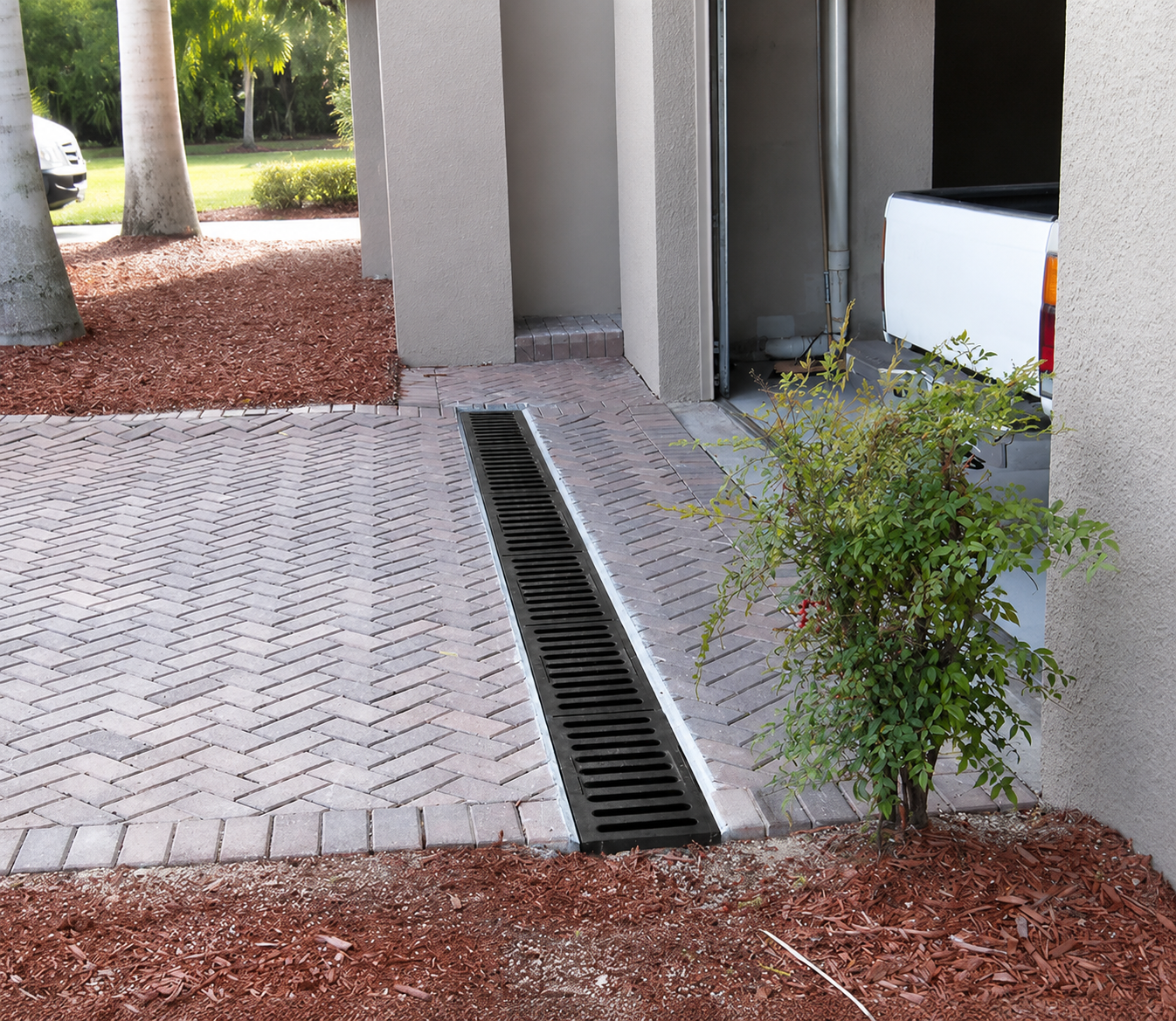
A channel drain is a long, narrow drainage system installed across or alongside a surface where water tends to travel. The top typically includes a grate that allows runoff to enter while still creating a relatively smooth surface for people or vehicles to cross. Beneath the grate, the channel collects water and sends it into a connected drainage route.
Instead of waiting for water to reach the lowest spot and form a puddle, the drain intercepts it as it moves. This can make channel drains particularly useful on driveways, garage approaches, patios, walkways, and other hardscaped areas where surface runoff follows a predictable path.
For example, imagine a driveway that slopes toward a garage. During heavy rain, water may flow down the driveway and collect directly in front of the garage door. Installing a properly positioned channel drain across the driveway can help capture that runoff before it reaches the garage and redirect it elsewhere.
Channel drains may be worth considering when you notice signs such as:
- Water regularly pooling in the same paved area
- Runoff flowing toward a garage or building entrance
- A patio that stays wet well after a storm has ended
- Water crossing a walkway and creating slippery conditions
- Recurring puddles along a pool deck or entertainment area
- Rainwater moving toward the foundation instead of away from it
- Existing grading that cannot easily be changed without major construction
The drain itself is only part of the solution. Once water enters the channel, it needs somewhere appropriate to go. That may involve connecting the drain to underground piping and directing the water toward a safe discharge area where it will not simply create a new drainage problem.
Where Channel Drains Make the Most Sense
Channel drains work best when the drainage problem involves surface water moving across a defined area. They are especially useful on hard surfaces where runoff cannot soak into the ground and where changing the slope of the entire area may not be practical.
Driveways are one of the most common applications. A channel drain can be installed across the width of a driveway to capture water before it reaches a garage, foundation, or low section of pavement. The exact location depends on how the driveway is graded and where water naturally travels during a storm.
Patios and walkways can present similar problems. A beautiful outdoor area is much less enjoyable if it develops a large puddle every time it rains. Strategically placed drainage can help remove water more quickly and protect surrounding landscaping from repeated runoff.
Pool decks are another area where surface drainage matters. Water can come from both rainfall and normal pool use, so the surrounding surface needs an effective way to manage excess water. A channel drain may help move that water away from areas where people walk or gather.
However, a channel drain is not automatically the answer to every wet property. If an entire lawn remains saturated, groundwater is entering a basement, or downspouts are releasing large amounts of water beside the foundation, another drainage solution may be more appropriate.
Before recommending a channel drain, a drainage professional should consider questions such as:
- Where is the water coming from?
- What direction does it naturally travel?
- Is the problem limited to surface runoff?
- Where can collected water be safely discharged?
- Will gravity move the water effectively?
- Are downspouts or grading contributing to the problem?
- Would another drainage system work better on part of the property?
Looking at the entire drainage pattern is important because homeowners usually want more than a dry strip of concrete. They want to stop the recurring problem. Correctly identifying how water enters, moves across, and exits the property makes it possible to design a solution around the actual cause.
Why the Drain Has to Send Water Somewhere
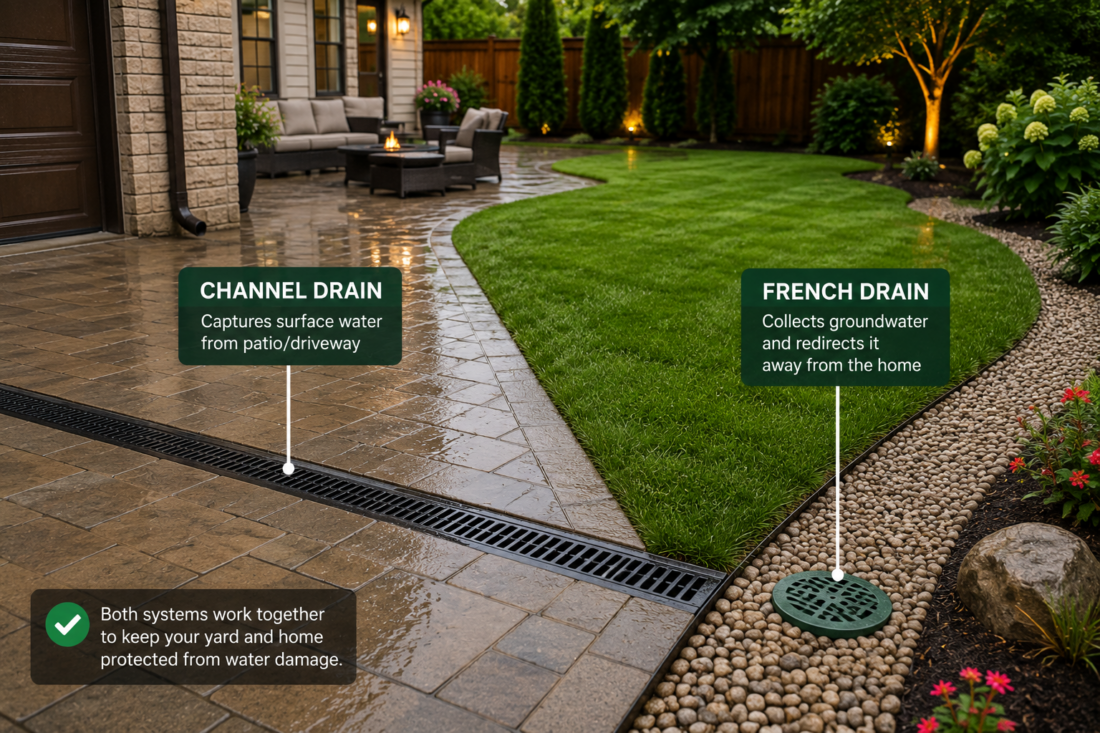
Installing a channel drain without planning where the water will go only solves half of the problem. The purpose of the system is not simply to collect water. It is to move that water away from the area where it is causing trouble and discharge it somewhere that can handle the additional runoff safely.
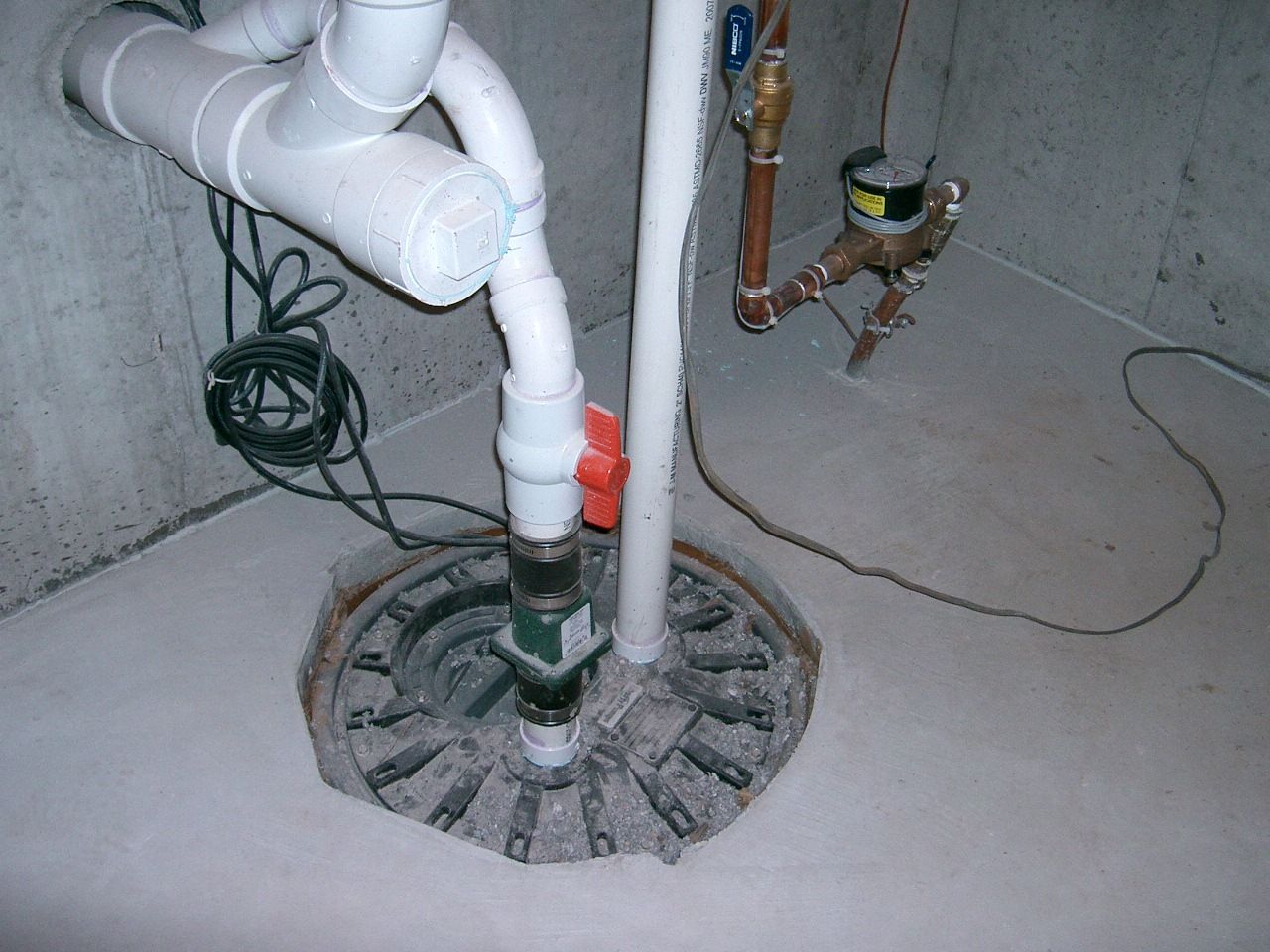
In some situations, gravity can do most of the work. Underground drainage piping can be installed with enough slope to carry collected water toward a suitable discharge point. On other properties, the elevations may make gravity drainage difficult or impossible. A sump pump or another method of moving water may then need to become part of the system.
Before installing a drainage system, PPS Waterproofing may need to evaluate factors such as:
- The slope and grade of the property
- The direction surface water currently travels
- The volume of runoff reaching the problem area
- The best location for the channel drain
- Available routes for underground drainage piping
- Whether gravity can carry water to the discharge area
- Whether a sump pump or additional drainage component is needed
- How close the drainage issue is to the home's foundation
This broader evaluation is what separates a drainage solution from simply adding a grate to the ground. Water follows the path created for it, so every part of that path matters. The channel needs to capture runoff in the right location, the piping needs to carry it effectively, and the discharge point needs to release it without sending the problem somewhere else.
Channel drains can also be combined with other improvements. If downspouts are contributing to the volume of water around the house, underground downspout extensions may help carry roof runoff farther away. If landscaping or grading is sending water toward a patio, additional drainage work may be needed to redirect that flow before it reaches the hard surface.
Protecting More Than the Driveway or Patio
Exterior drainage has a larger purpose than eliminating puddles. Keeping water under control around the outside of a home can also help reduce the amount of moisture reaching the foundation, basement walls, crawl space, and other areas where recurring water intrusion can become expensive and disruptive.
That is why homeowners should pay attention to where water goes during a storm. Watching the property while it is raining can reveal a surprising amount about drainage. You may notice water flowing across the driveway toward the garage, spilling from a downspout beside the foundation, or gathering against a patio where the grade changes.
A professional drainage evaluation may be worthwhile if you regularly notice:
- Standing water that remains long after rainfall ends
- Runoff flowing directly toward your foundation
- Water entering or approaching a garage
- Soil erosion beside paved surfaces
- Repeated moisture problems after heavy storms
- Several drainage issues occurring around the same area of the property
Professional Drainage Solutions for Metro Atlanta Homes
Drainage problems can look simple from the surface, but lasting solutions usually depend on understanding the entire property. The source of the runoff, surrounding grades, existing hardscapes, foundation location, discharge options, and elevation changes can all influence the final design.
PPS Waterproofing helps homeowners address water and moisture problems throughout Atlanta and surrounding Metro Atlanta communities. Channel drain installation can be an effective option when surface runoff repeatedly collects on driveways, patios, pool decks, walkways, and similar areas, but the system should always be designed around the specific drainage conditions of the property.
For homeowners in Atlanta, Marietta, Kennesaw, Smyrna, Woodstock, Dallas, Acworth, Canton, and nearby communities, recurring standing water is worth addressing before it creates additional problems. What begins as an annoying puddle can sometimes signal a larger issue with the way water is being directed around the home.
If you are dealing with standing water on your driveway, patio, walkway, or another paved area, contact PPS Waterproofing for a professional drainage evaluation. By identifying where the water is coming from and designing a reliable route to carry it away, the right drainage solution can help keep your outdoor surfaces more usable while providing better protection for the areas surrounding your home.
Search an Article
Contact Us
Get your FREE QUOTE today!
FOLLOW US ON SOCIAL MEDIA:

Protect Your Home From the Ground Up
Don’t let moisture and foundation issues become costly problems. Trust PPS Waterproofing for reliable solutions that keep your home dry and protected.